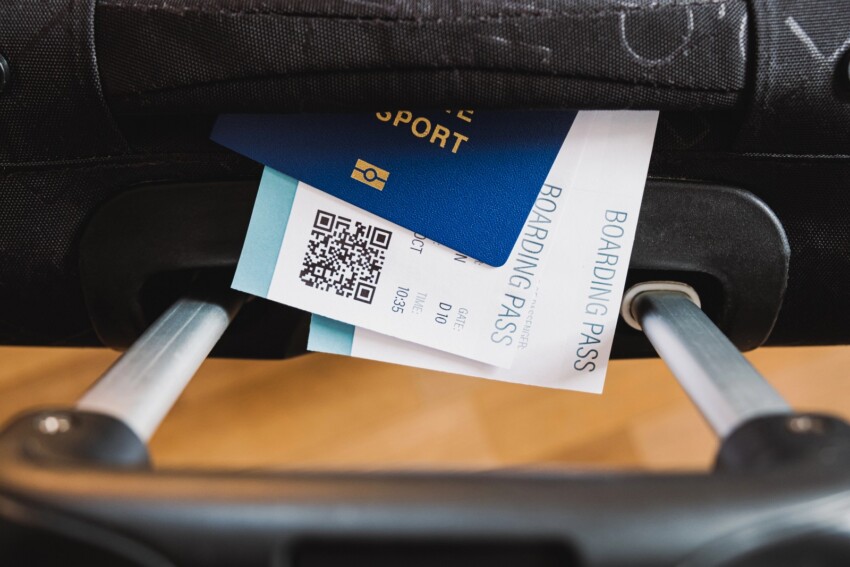
Poland has been a member of the European Union since 2004 and part of the Schengen Area since 2007: for European citizens this means freedom of movement without systematic border controls and no visa required, regardless of length of stay. It is one of the most accessible destinations for travellers from the UK, France, Spain or any other country in the EU, with entry procedures streamlined to the maximum.
That said, “no visa” does not mean “no documents”. Even within the Schengen Area, you must be able to demonstrate your identity at any time, and Polish law enforcement has the right to request a valid document during routine checks. Knowing exactly which documents to bring, which are valid and which are not, and what to do in case of loss or theft is the foundation of any carefully organised trip.
In this guide you’ll find everything European citizens need to know before travelling to Poland: from mandatory documents to rules for minors, from driving licence regulations to embassy contacts in case of emergency.
EU citizens can enter Poland with a valid identity card alone: a passport is not necessary. This applies to British citizens and citizens of all other EU member states, as well as to citizens of Norway, Iceland, Liechtenstein and Switzerland, which although not in the EU are part of the Schengen Area or have equivalent bilateral agreements.
The UK identity card is valid for entry to Poland in both electronic format (card format, with chip) and paper format, provided it has not expired. Pay attention to one detail that many overlook: the validity of ID cards varies by country — in the UK, adult passports are valid for 10 years. Check the expiry date well in advance, especially if your document is not recent. Some airlines and international bus operators require that the document be valid for at least three or six months beyond your return date: check the specific conditions of your carrier before travelling.
A passport is obviously accepted as an alternative to an identity card and is preferable for travellers planning to leave the Schengen area during the same trip — for example, visiting Ukraine or a non-Schengen country. For stays in Poland alone, carrying a passport is a useful precaution but not mandatory.
Not all identity documents are accepted as travel credentials for Poland. A driving licence, whilst being a valid form of identity for many purposes, is not recognised as a travel document and cannot be used to cross borders. The same applies to an expired passport: even if it may be accepted with some tolerance in some countries outside the EU, in Poland — as throughout the Schengen area — an expired document has no value for entry purposes. Travelling with invalid documents risks being refused boarding by the airline or rejected at the border.
EU citizens do not need any visa to stay in Poland, regardless of the length of stay. There are no time limits to the right of residence of EU citizens on Polish territory: you can stay for days, weeks, months or years without needing any prior authorisation.
For stays exceeding three months, EU citizens intending to settle in Poland for work, study or residence purposes must register with the competent Regional Office (in Polish Urząd Wojewódzki) and obtain a certificate of residence (zaświadczenie o zarejestrowaniu pobytu obywatela UE). This is not a permit in the restrictive sense — the right to stay already exists by law — but an administrative registration that formally certifies your presence on the territory. For tourist or short-term stays, this registration is not required.
Minor EU citizens can enter Poland with a valid identity card. Children listed on a parent’s document — an outdated practice but still present in some older documents — do not have autonomous travel rights: each minor must possess their own valid individual document.
When a minor travels accompanied by both parents, no additional documents are required beyond identity documents. The situation becomes more complicated when the minor travels with only one parent, with relatives or with carers other than parents. In these cases, whilst not formally mandatory for EU citizens crossing internal Schengen borders, it is strongly advisable to carry a parental consent declaration signed by the other parent or both parents in the case of third-party carers. The declaration, preferably drafted in your native language and in English, must include the minor’s details, the carer’s details, the destination and travel dates. Some airlines require it explicitly at check-in: verify your carrier’s conditions before departure.
For unaccompanied minors — children travelling alone, for example to reach a parent resident abroad — airlines have specific in-flight escort procedures that vary from carrier to carrier: contact your airline directly to learn about the requirements and costs of the service.
A driving licence issued in your country is recognised and valid in Poland without any conversion or supplementation. An international driving permit is not required for EU citizens driving in Poland with a document issued by an EU member state. Check that your driving licence has not expired before travelling: the validity of driving licences varies according to the age of the holder and the category of authorisation.
Anyone driving their own vehicle must carry the vehicle registration document and the motor insurance certificate. The green card insurance is not mandatory within the European Union but is highly recommended as immediate proof of cover in case of an accident or inspection by Polish law enforcement. For rental vehicles, documentation is provided directly by the rental company and already includes the required insurance cover.
If you plan to take a company car to Poland, check with your employer that the registration document includes authorisation for use abroad or that an equivalent document exists: Polish law enforcement can request proof that the driver is authorised to use the vehicle.
The European Health Insurance Card is not an entry document, but it is one of the most important documents to carry to Poland. As explained in our guide on travel insurance in Poland, the EHIC entitles UK and European citizens to access public hospital facilities in Poland that have agreements with the national health system (NFZ) on the same terms as Polish citizens. Without it, even treatment in public facilities may be charged at full rates.
The EHIC can usually be obtained through your national health service. Check the expiry date before travelling: expired cards are not accepted. In case of an expired or lost card, you can request a temporary replacement certificate from your national health service, which has limited validity but is fully equivalent to the EHIC for accessing healthcare abroad.
If you lose your documents or they are stolen during your stay in Poland, the first thing to do is file a report with the Polish police (Policja), reachable at the emergency number 997 or the European number 112. A report is necessary both to activate any insurance cover and for subsequent consular procedures.
The next step is to contact your embassy or consulate in Poland. Your diplomatic representatives can issue an emergency travel document (Emergency Travel Document) that allows you to return to your home country in case of loss or theft of your passport or identity card. To obtain this document you must present yourself in person at the consular window with a copy of the police report and, if available, photocopies or digital photos of the lost documents.
For this reason, before travelling it is good practice to keep a photocopy of your documents separate from the originals — in your luggage, in a different bag, or as a digital scan in cloud storage — so that you have your details at hand in case of need.
Since Poland is part of the European Union and the Schengen Area, there are no systematic customs controls for travellers from other EU countries. There are no restrictions on the transport of goods purchased domestically for personal use, provided quantities fall within the indicative parameters set by the EU (for example, up to 800 cigarettes or 10 litres of spirits for personal, non-commercial use).
Those entering Poland from non-Schengen countries — for example returning from Ukraine or Belarus — are subject to normal Schengen area customs controls. In this case it is mandatory to declare the transport of cash exceeding €10,000 (or equivalent in another currency) at the border customs office. Failure to comply with this rule is subject to significant penalties regardless of the traveller’s nationality.
 Hotel
Hotel  Budget accommodations
  Apartments
  Family Hotel
  Luxury Hotel