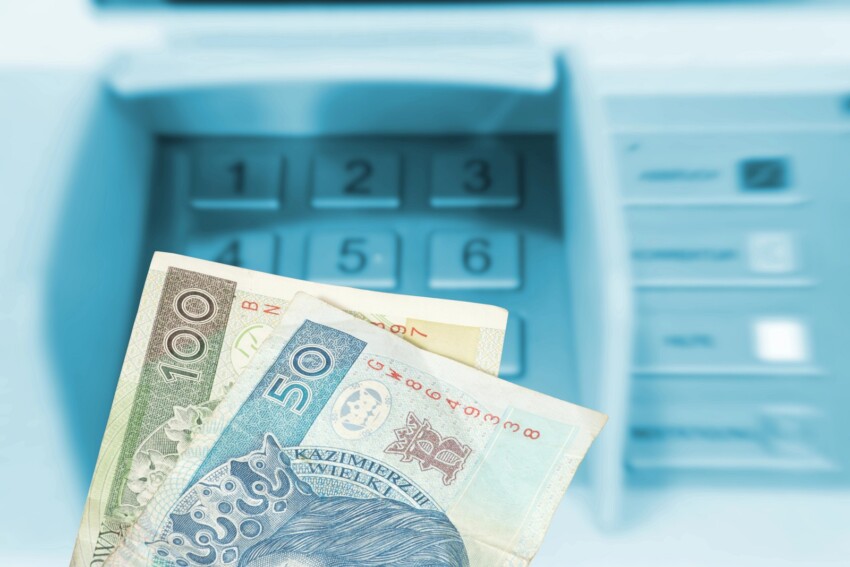
When you pay with a card in a shop, restaurant or hotel in Warsaw, the terminal will often display what seems like an innocent question: would you like to pay in euros or in Polish zloty (PLN)? This option is called Dynamic Currency Conversion, commonly known as DCC, and it’s one of the most widespread and profitable traps for European tourists in Poland.
The mechanism is straightforward: if you agree to pay in your home currency, the merchant (or the bank operating the terminal) applies an exchange rate that includes a hidden commission, often between 3% and 7% above the actual interbank rate. Your British or European bank doesn’t convert anything because the transaction arrives already in euros: the margin stays entirely in the DCC provider’s pocket.
There’s only one rule: always choose to pay in PLN. In Polish, the screen you need to refuse often shows “przelicz na EUR” (convert to euros) or displays the € symbol directly. Tap “Nie” (no) or select the zloty option. If the cashier proceeds in euros without asking your confirmation anyway, dispute the transaction: you have the right to choose the local currency.
The European Commission has introduced stricter transparency requirements for DCC under PSD2 regulations, but the practice remains legal and widespread. Some terminals apply it automatically, without showing any selection screen: in this case, always check your receipt before signing or entering your PIN.
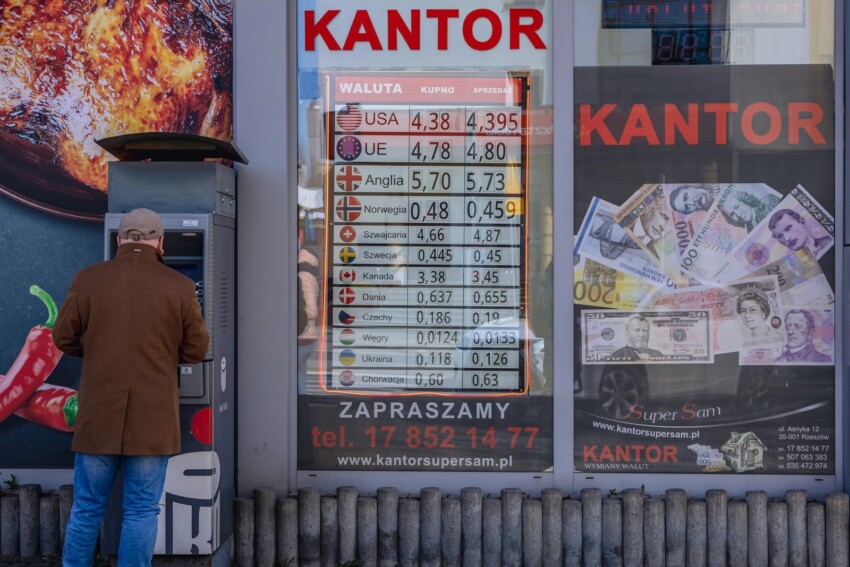
The Kantor is the Polish currency exchange, an institution you’ll find in every city with surprising density. Unlike banks, private Kantors don’t charge fixed commissions but make money solely through the spread—the difference between the buying and selling rates. Theoretically, this makes them more convenient than traditional banks for cash exchange.
The problem isn’t the Kantor itself, but where it’s located. Currency exchange offices in airport areas, major train stations (such as Warszawa Centralna or Kraków Główny) and high-traffic tourist zones apply spreads that can exceed 10-15% compared to market rates. Exchanging 500 euros in these places could cost you 50-75 euros in invisible losses.
Competitive Kantors are found instead in residential and commercial districts in the city centre, away from tourist flows. In Warsaw, areas around Marszałkowska or the Śródmieście district offer rates much closer to interbank levels. In Kraków, avoid currency exchanges around the main Market Square (Rynek Główny) perimeter and look for side streets. Before entering, compare the displayed rate with the ECB reference rate to have an immediate benchmark.
A practical detail you won’t find in standard travel guides: the best Kantors often treat 50 and 100 euro notes with slightly better rates than smaller denominations. Bring notes in good condition and medium-to-large denominations if you plan to exchange cash.
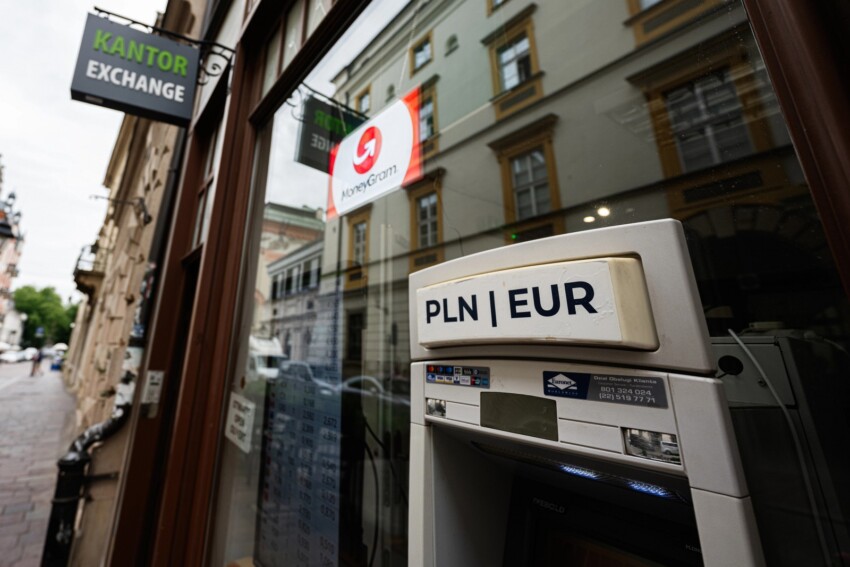
ATM withdrawal remains one of the most convenient ways to obtain zloty in Poland, but traps exist here too. The first involves DCC again: many ATMs, especially those of independent operators like Euronet or Planet Cash, display the same currency conversion screen as seen at POS terminals. Always choose “Withdrawal without conversion” or the Polish equivalent “Wypłata bez przeliczenia”.
The second trap is the fixed fee per withdrawal. Some private operator ATMs charge a fee that can reach 10-15 PLN per transaction, regardless of amount. To minimise impact, withdraw larger sums in a single operation rather than making multiple small withdrawals.
ATMs of traditional Polish banks don’t apply their own commissions for withdrawals with foreign cards, putting any charges entirely on the cardholder’s bank. The most extensive and reliable networks belong to PKO Bank Polski and Bank Pekao, both present throughout Poland with thousands of branches. ATMs from mBank and Santander Bank Polska are also widespread in major cities and apply the same policy without additional charges for foreign card withdrawals.
If you use an entry-level Italian card, check your bank’s conditions: some Italian banks apply a fee for every overseas withdrawal that adds to any exchange spread. Knowing these costs in advance lets you assess whether it’s worth withdrawing or bringing pre-exchanged cash.
Cards issued by fintech operators like Revolut and Wise are today’s most effective tools for paying and withdrawing in Poland while minimising costs. Both convert currency at real interbank rates, with no hidden spreads, within the limits set by your plan.
Revolut lets you open a PLN account and load zloty directly from the app at the current exchange rate, eliminating any conversion at payment time. The Standard plan (free) includes free withdrawals up to 200 euros monthly and weekday currency payments without commissions; a 0.5% spread applies at weekends. Higher plans (Plus, Premium, Metal) increase limits and remove the weekend surcharge.
Wise works slightly differently: conversion happens at the mid-market rate with a small transparent commission (typically 0.35% to 0.6% for euro-PLN), clearly shown before each transaction. Two free withdrawals monthly up to 200 euros; beyond that a fixed fee of 0.50 euros plus 0.2% of the amount applies. For those preferring predictable costs, Wise’s commission structure is simpler to calculate in advance.
Both apps show you in real time how much you’re spending in local currency, making budget control easy. Practical advice: even with these cards, always refuse DCC when the POS offers it. Revolut and Wise cards convert in your digital bank at the best rate only if the transaction arrives in PLN.
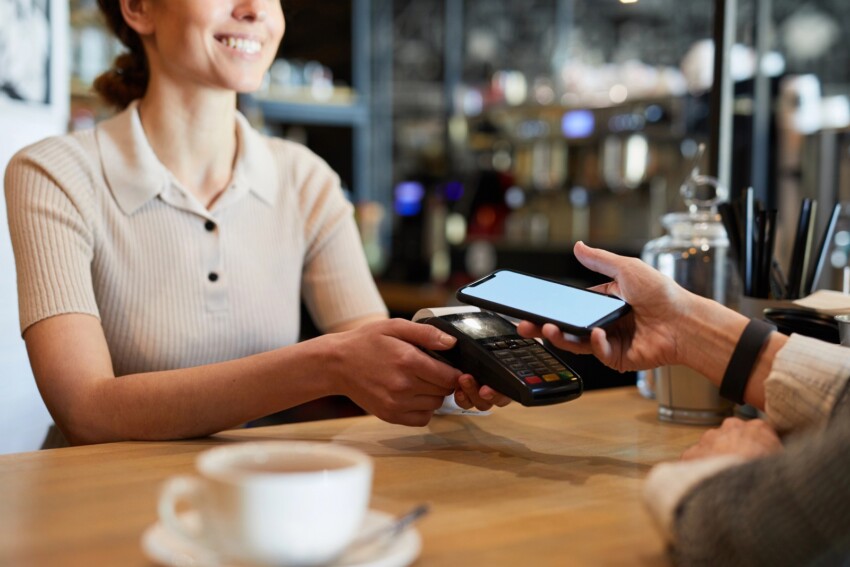
Poland has one of Europe’s highest rates of digital payment adoption. BLIK, the mobile payment system developed by Polish banks, is accepted virtually everywhere: supermarkets, restaurants, taxis and even street vendors. As foreign tourists you can’t access BLIK directly (it requires a Polish bank account), but you’ll notice how quickly locals pay by entering a six-digit code on their phones.
Contactless payments with European Visa and Mastercard cards work without problems in almost all shops. American Express has much more limited acceptance, particularly outside major cities: always check before relying solely on this network.
PLN cash remains useful in local markets, rural areas and local transport in some smaller cities. In Warsaw and Kraków’s city buses you can buy tickets with a card, but in smaller towns or on intercity routes with small private operators, cash is often the only option. Keeping 50-100 PLN in your pocket is wise precaution even for digitally-savvy travellers.
Following a few simple rules lets you avoid most unnecessary costs during a Poland trip. At POS terminals and ATMs, always choose PLN and refuse any currency conversion offers. For cash, exchange exclusively at Kantors in non-touristy central districts, never at the airport or station.
For withdrawals, prefer ATMs from PKO, Pekao or mBank and withdraw substantial amounts in one transaction. Finally, getting a Revolut or Wise card before departure is the most worthwhile investment you can make for a trip to Warsaw, Kraków or any other Polish city.
 Hotel
Hotel  Budget accommodations
  Apartments
  Family Hotel
  Luxury Hotel