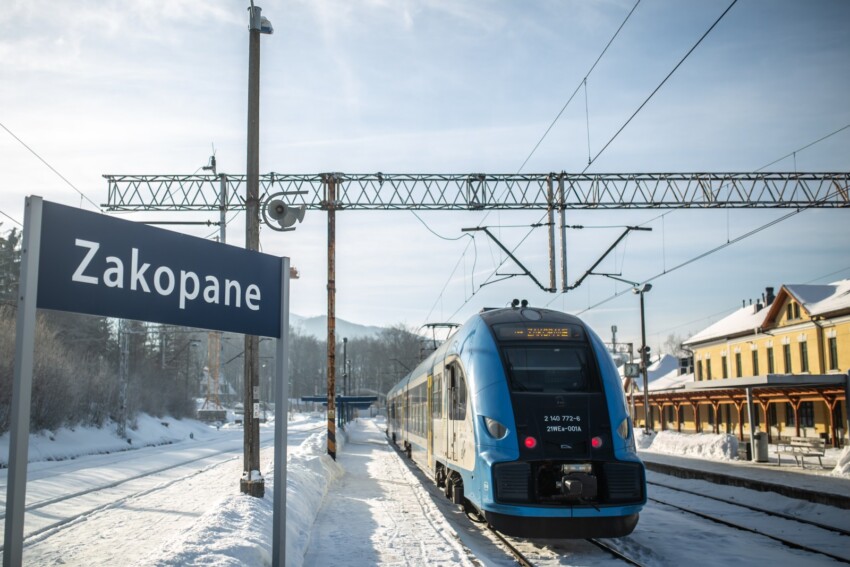
Poland boasts one of Central Europe’s most developed public transport networks, effectively connecting major cities whilst ensuring smooth urban mobility even without a car. Warsaw, Kraków, Wrocław and Gdańsk are served by comprehensive networks of trams, buses and metro systems that blanket every neighbourhood, with frequent peak-hour services and weekend night-time operations. Ticket prices are significantly lower than the Western European average: a single urban journey costs between 1.20 and 4.00 PLN depending on the city (under a euro in most cases), and a day ticket rarely exceeds 15 PLN.
For long-distance travel, the PKP Intercity railway network covers all major destinations with frequent services and competitive journey times on high-speed routes. The Warsaw–Kraków route, for instance, is one of Europe’s busiest corridors and is served by dozens of trains daily, making domestic flights entirely unnecessary. Secondary cities are also well connected thanks to regional trains and a long-distance coach system operated by companies such as FlixBus and Polski Bus, with fares often under 10 PLN for 200–300 km journeys booked in advance.
Navigating this system has become far simpler thanks to a number of apps designed specifically for the Polish market. Jakdojade for urban transport, the PKP Intercity app for long-distance trains, Uber and Bolt for car journeys: every mobility need has a dedicated tool, often with an English interface and integrated payment. This guide contains everything you need to use them effectively, avoid common mistakes and move around Poland with the ease of a local.
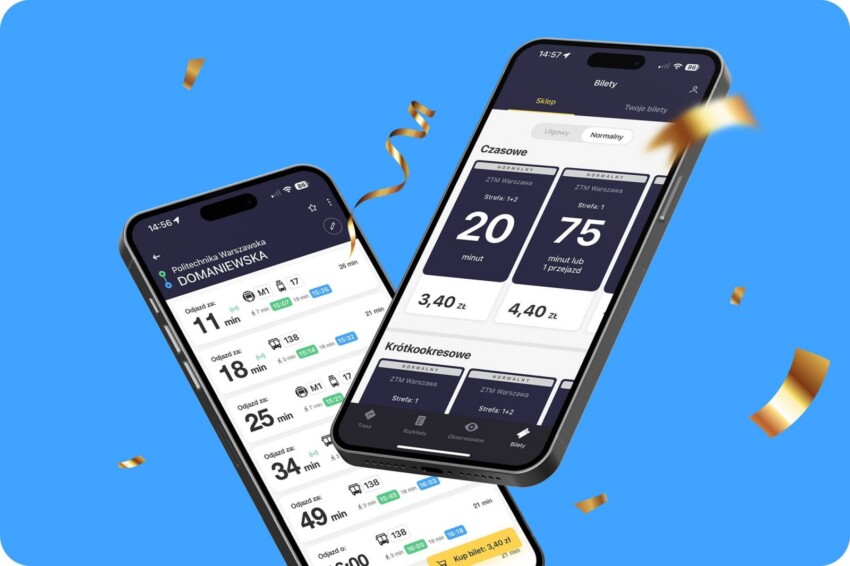
Jakdojade is the go-to application for planning routes on Poland’s public transport system. The name literally means “how do I get there” and perfectly sums up its function: enter your departure point and destination, and the app calculates the optimal route combining buses, trams, metro and suburban trains, with real-time schedules and delay notifications. It’s available free for Android and iOS and covers over 30 Polish cities, including Warsaw, Kraków, Wrocław, Poznań, Gdańsk and Łódź.
The interface is also available in English, making it immediately usable for foreign travellers without having to decipher Polish technical terms. A particularly useful feature is the display of estimated vehicle occupancy: during peak hours, the app flags which services are most crowded, allowing you to choose an alternative with a slightly longer wait but a guaranteed seat.
Open the app and enter your destination in the search field at the top. Jakdojade automatically geolocalises your position as the starting point, but you can change this manually by typing an address or selecting a point on the map. The results screen shows two or three route options ordered by duration, with the number of changes, services involved and ticket cost indicated. Tap a route to see the detailed stop-by-stop information with precise departure times for each service.
A function often overlooked by visitors is the ability to set your desired arrival time instead of departure time: invaluable when you have a fixed appointment or a train to catch. You’ll find this option by tapping the clock icon next to the destination field.
In Poland’s major cities, Jakdojade integrates a digital ticket purchase system that eliminates the need to hunt for a machine or newsagent. Select your desired route, tap “Buy ticket” and choose the type: single journey, time-limited ticket (20, 40, 60 or 90 minutes depending on the city) or day pass. Payment is made using a credit or debit card saved in the app; the ticket then appears as a QR code or alphanumeric code to show inspectors.
Pay attention to an important difference between cities: in Warsaw the digital ticket purchased on Jakdojade must be activated in the app by tapping the “Activate” button before boarding, not at the moment of purchase. In Kraków and other cities the ticket activates automatically upon purchase. Always read the specific instructions for the city you’re in, visible on the purchase confirmation screen.
For time-limited tickets, the countdown starts from activation and doesn’t pause if you change services: a 75-minute ticket covers your entire journey including connections, provided you complete it within the time limit. The day pass (dobowy) is almost always the most economical option if you’re planning more than three journeys in the same day.
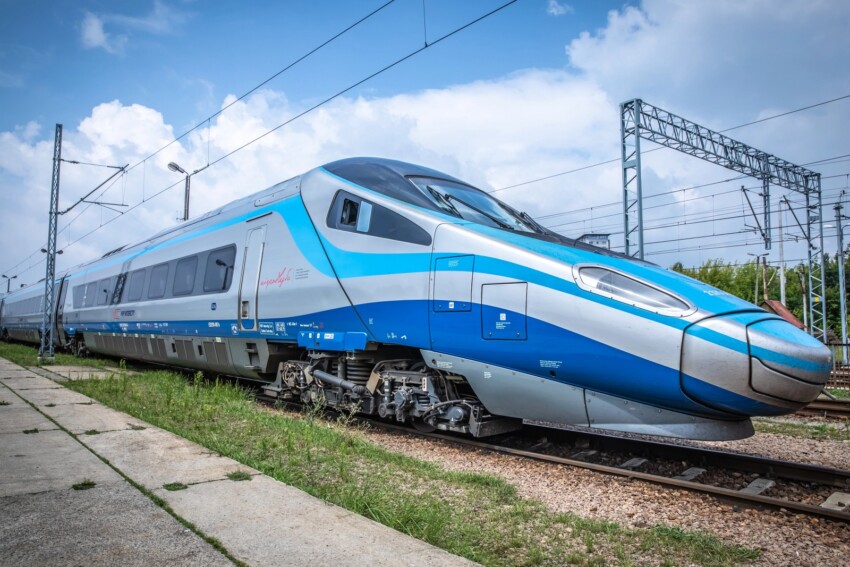
PKP Intercity is Poland’s main long-distance rail operator and runs services connecting all the country’s major cities. Understanding the categories of trains available is essential to choosing the right value for money on your journey.
The Express InterCity Premium is Poland’s high-speed train, operating mainly on the Warsaw–Kraków route and on lines to Gdańsk and Wrocław. It travels at speeds of up to 250 km/h on some stretches and covers the distance between Warsaw and Kraków in approximately 2 hours and 20 minutes, making any domestic flights between these two cities redundant. The trains are modern, quiet and equipped with power sockets at every seat, onboard Wi-Fi and a buffet car service. Seat reservations are compulsory and included in the price.
The cost of an EIP second-class ticket on the Warsaw–Kraków route varies significantly depending on how far in advance you buy: purchased 30–60 days ahead you’ll find promotional fares around 39–49 PLN, while within a week the price rises easily to 129–159 PLN or more. The pricing structure is similar to budget airlines: the earlier you buy, the less you pay.
InterCity (IC) trains and especially TLK (Tanie Linie Kolejowe) services, which literally means “cheap railway lines”, cover the same routes as EIP but with longer journey times and noticeably lower prices. An IC from Warsaw to Kraków takes about 2 hours and 40 minutes; a TLK can take 3 hours or more depending on the route and intermediate stops.
TLK trains often comprise old-fashioned compartment carriages with six seats per cabin, and the comfort is decidedly inferior to EIP. It’s not uncommon to find carriages with irregular heating in winter or no air conditioning in summer. That said, for budget-conscious travellers or for short journeys, they represent a perfectly functional solution. On TLK trains, seat reservation is not always compulsory, but it’s highly recommended at weekends and during holidays, when trains often run full.
The Regio category, operated by regional operators rather than PKP Intercity, covers local connections and smaller towns with slow trains and rock-bottom fares, useful for exploring rural areas or reaching destinations off the main rail corridors.
The official site pkpintercity.pl allows online booking with an English interface. Enter your departure and arrival cities, select the date and the system will show all available trains ordered by time, with the ticket price indicated for each category and class. Click on your chosen train to see seat availability and choose your position in the carriage via an interactive map: you can select the window side, direction of travel and proximity to the buffet car.
The ticket purchased online is emailed to you as a PDF and can be shown directly on your phone screen to the conductor: there’s no need to print it. On the site you’ll also find the “Promo” section, where PKP Intercity publishes discounted fares well in advance: subscribing to the newsletter or checking this section regularly is the most effective way to find EIP tickets at advantageous prices.
Alternatively to the website, the official PKP Intercity smartphone app offers the same features with the advantage of storing tickets directly on your phone and receiving real-time delay notifications. For those buying tickets at the last minute at stations, the automatic ticket machines accept European payment cards without issue, whilst manned counters can have significant queues during peak season.
Ride-hailing apps are extremely widespread in Poland and prices are noticeably lower than the Western European average, thanks to lower living costs and fierce competition between operators. A journey from central Warsaw to Chopin Airport (approximately 12 km) costs on average between 30 and 45 PLN (€7–11), a fraction of what a traditional taxi without a metre would charge under the same conditions.
Uber operates in Poland’s major cities with the same international interface you already know. Payment is made directly via the card saved in the app, with no need for cash. During peak hours dynamic pricing can triple the base fare, so in high-demand situations it’s worth comparing alternatives before booking.
Bolt is the Estonian operator that has gained considerable market share in Poland, often with lower prices than Uber on the same routes. The app works identically to Uber and accepts the same payment methods. Bolt is particularly competitive in Warsaw and Kraków, whilst in medium-sized cities driver availability may be lower during night hours.
FreeNow (formerly mytaxi) is the third operator present in the larger cities and stands out for integrating both traditional taxis with metres and private drivers. If you prefer the predictability of a certified metre over dynamic pricing, FreeNow lets you explicitly choose this option. In airport areas, where unlicensed taxis are more common, booking via app is always the safest solution regardless of the operator chosen.
A practical tip for those arriving at Warsaw’s Chopin Airport: the exit for ride-hailing apps is located at a lower level than the traditional taxi exit, signposted accordingly. Always head towards the designated area to avoid being approached by drivers offering unregulated rides at inflated fares.
Even without apps, Polish public transport is navigable by following some conventions common to all cities. The service number followed by the letter “N” always indicates a night-time service. Stops with electronic displays show waiting times in real time; where displays are absent, the stop code allows you to check schedules by SMS, sending the code to the number shown on the sign (service active in Warsaw, Kraków and Wrocław).
Tickets purchased from automatic machines at stops accept coins and banknotes but not always cards: always carry some PLN in cash as a backup. At newsagents (Ruch or Inmedio), found in stations and shopping centres, you can buy full-price tickets and sometimes find discounted books of tickets. Ticket validation always takes place on board in yellow or orange machines: forgetting to validate, even with a valid ticket in your pocket, is treated as travelling without a valid ticket and incurs an immediate fine if checked.
 Hotel
Hotel  Budget accommodations
  Apartments
  Family Hotel
  Luxury Hotel