
aricona
Aricona Bandiera Polonia 90x150cm – polacca – resistente alle intemperie - con occhielli in ottone - 100% poliestere - cuciture doppie robuste e colori vivaci – ideale per gli amanti delle bandiere
Buy on Amazon
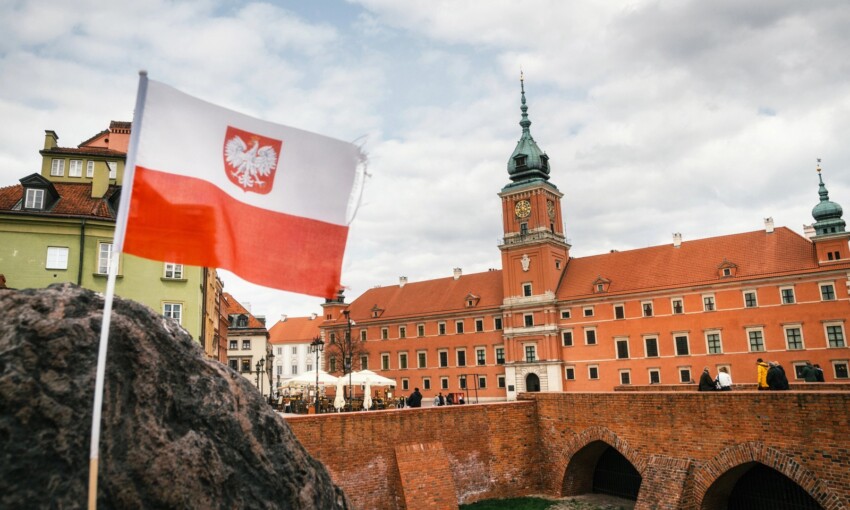
First-time visitors to Poland are struck by the ubiquity of the national flag. It flies from government buildings and town halls, hangs in the windows of private homes on national occasions, adorns buses, sports team shirts and history book covers. Poles call their flag simply flaga polska or biało-czerwona — the white and red — and the emotional bond with this symbol is interwoven with one of Europe’s most turbulent national histories.
Two horizontal stripes, white above and red below: at first glance, one of the simplest flags among European nations. Yet behind this simplicity lies a rich layering of meanings, medieval legends and political choices that have traversed centuries of battles, partitions and rebirths. Poland’s flag has remained substantially unchanged for over seven hundred years, surviving three partitions of the country, two world wars and forty years of communist rule that sought — without success — to bend its symbolism to its own ends.
In this guide, we trace the history, the meaning of the colours and curiosities linked to one of Central Europe’s most ancient and recognisable national symbols.
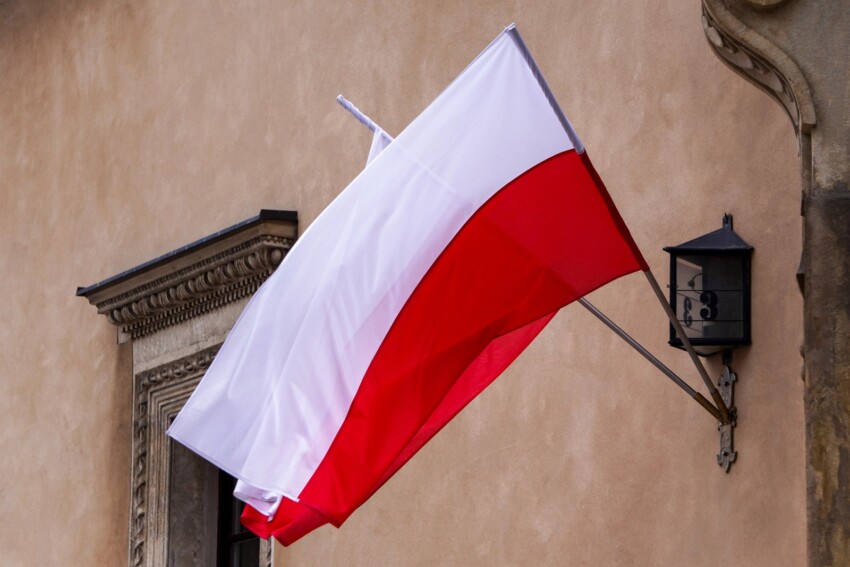
The Polish flag is a rectangle divided horizontally into two stripes of equal width: the upper stripe is white and the lower stripe is red. The official proportions are 5:8 (height to width), established by Polish law on national emblems in 1980 and confirmed by the Constitution of the Republic of Poland in 1997. The official red corresponds to Pantone 485 C, an intense and saturated red that in digital reproductions approximates hexadecimal #DC143C.
A second version of the flag exists, technically known as the flag with coat of arms (flaga z godłem), in which the national coat of arms is centred on the white stripe: the White Eagle crowned on a red field. This version is reserved for official use by the Polish state abroad — on embassies, consulates and ships in international waters — whilst the simple bicolour version is used by citizens and in ceremonies within the country. Using the flag with coat of arms in non-institutional contexts is not forbidden, but is considered inappropriate by convention.
A curiosity that catches many visitors off guard: the Polish flag upside down becomes the flag of Indonesia, also a horizontal bicolour but with red above and white below. The two nations have diplomatically regulated this symbolic overlap on several occasions, especially during international sporting events where the risk of confusion is real.
The origins of Polish national colours date back to the 14th century and are inseparably linked to the emblem of the Kingdom of Poland: the White Eagle on a red field, already present in royal seals of the 13th century and codified in Polish heraldry during the reign of Władysław I the Short (1320–1333), the sovereign who reunified the fragmented Polish territories and brought them under a common crown. The white and red thus derive directly from the heraldic colours of the coat of arms: the white from the eagle, the red from the background.
The white and red colours were officially adopted as Poland’s national colours on 3 May 1792, marking the first anniversary of the Constitution of 3 May 1791 — the first written constitution in Europe and the second in the world after the American constitution of 1787. On that occasion, Polish soldiers wore white and red cockades as a sign of national belonging. The white-and-red cockade became the symbol of national resistance during 19th-century uprisings against occupying powers.
During the period of the three partitions of Poland (1772, 1793, 1795), when the country ceased to exist as an independent state for 123 years, the national flag had no legal status but continued to be used clandestinely as a symbol of identity by Polish communities in exile and in resistance movements. Its survival as a collective symbol, in the absence of a state to protect it, testifies to the depth of the bond between the Polish people and their national emblems.
With the reconstitution of the Polish state in 1918, at the end of the First World War, the white-and-red flag was officially adopted by the Second Polish Republic. During the German occupation in the Second World War (1939–1945), displaying the Polish flag was punishable by death, yet it continued to fly in the clandestine operations of the Armia Krajowa (Home Army) and became the symbol of the Warsaw Uprising of 1944. At the end of the conflict, the communist-led Polish People’s Republic retained the same colours but modified the coat of arms, removing the crown from the White Eagle — the crown was restored in 1990, with the fall of the regime.
The colours of the Polish flag have no officially codified symbolic interpretation: no official document of the Republic of Poland assigns specific meanings to white and red. This has not prevented the development, over the centuries, of popular and literary interpretations that have come to acquire their own cultural authority.
White is traditionally associated with purity, honour and peace, but also — more concretely — with the snow that covers the Polish plains for months each year and the whiteness of the White Eagle that features in the coat of arms. In some romantic interpretations of the 19th century, white represented the light of freedom and the purity of national ideals during periods of foreign oppression.
Red has been interpreted variously as the blood shed in defence of the nation, as the fire of national resistance, or simply as the heraldic red field from which it historically originates. During the Polish Romantic period — that of Adam Mickiewicz and Juliusz Słowacki — red took on a strongly martyr-like connotation, linked to the sacrifices of the failed uprisings of 1830 and 1863 against Russian domination.
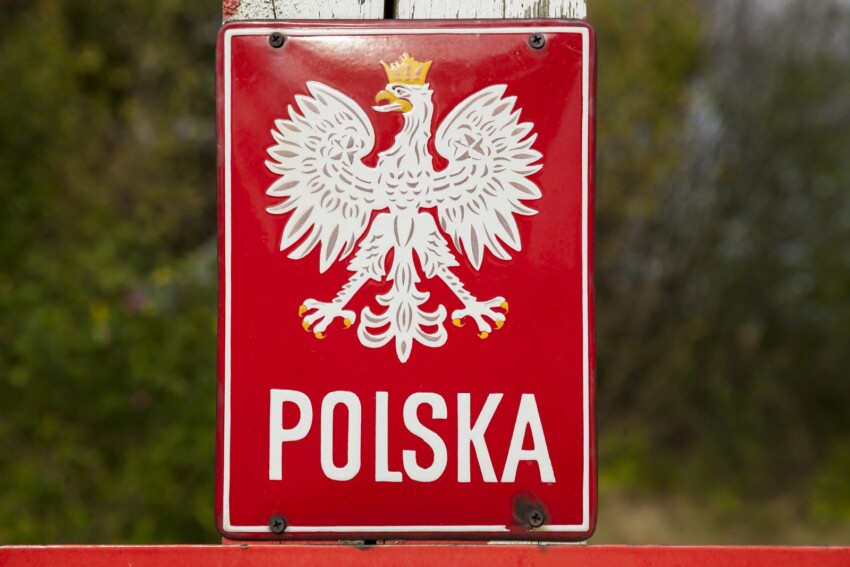
The Crowned White Eagle (Orzeł Biały) is Poland’s most ancient national symbol, predating the national colours themselves by at least a century. The legend of its origin dates back to the Piast, the legendary founder of the first royal Polish dynasty: according to the account, Prince Lech, the mythical founder of Poland, spotted a white eagle nesting against a red sunset sky and chose that location to found his capital, Gniezno. From that moment the white eagle on a red field became the symbol of the dynasty and then of the kingdom.
Historically, the eagle appears in the seals of Duke Przemysł II as early as 1295, when he was crowned King of Poland. The current version of the coat of arms, with the crown restored and the talons and beak gilded, was officially adopted in 1990 with the end of the People’s Republic. Compared to previous versions, the current eagle has a slightly longer neck and wings with a more pronounced curve, the result of a redesign commissioned from artist Andrzej Heidrich, the same graphic designer who for decades designed the Polish banknotes.
2 May is Flag Day of the Republic of Poland (Dzień Flagi Rzeczypospolitej Polskiej), established in 2004. The date is no coincidence: 2 May falls between 1 May (Labour Day) and 3 May (anniversary of the 1791 Constitution), creating a symbolic bridge between the two occasions. On this day public institutions display the flag and ceremonies are organised throughout the country.
3 May is National Constitution Day, one of the most deeply felt occasions in Poland. On this day the biało-czerwona flies from every public building and many private homes, especially in historic cities such as Warsaw and Krakow. The combination of 2 and 3 May effectively creates a long national weekend during which white and red dominate the visual landscape of every public space in the country.
Other occasions when the flag assumes a central role are 15 August (Armed Forces Day, commemorating the victory in the Battle of Warsaw in 1920 against the Red Army), 1 November (All Saints’ Day, a day of national remembrance) and 11 November (Independence Day, anniversary of the restoration of sovereignty in 1918).
During the Warsaw Uprising of 1944, Polish fighters from the Armia Krajowa wore white-and-red armbands as a sign of recognition, since access to actual flags was obviously impossible in an occupied city. These armbands, often hastily sewn together with whatever fabric was available, are today preserved in the Warsaw Uprising Museum as some of the most moving relics of the entire collection.
Poland is the only country in the world to celebrate a day dedicated specifically to its own flag — 2 May — separate from the main national holiday. The choice reflects the cultural and identity importance that the symbol has acquired during the 123 years when no Polish state existed to protect it.
The white and red colours appear in the flags of other countries with historical or cultural roots linked to Poland: the flag of Belarus includes red as a dominant colour, and that of Latvia features a bicolour composition with similar proportions. None of these similarities are, however, the result of direct influence: they are independent heraldic convergences.
Finally, a practical detail useful to visitors: during major sporting events in which Poland participates — World Cups, European Championships, Olympics — Polish cities quite literally cover themselves in white and red spontaneously and extensively. If you visit the country in coincidence with one of these events, the urban landscape you find will be visibly different from any other time of year.
Want to buy a high-quality Polish flag? To help you choose, we have compared the most interesting offers on Amazon, selecting three different types by format and price, perfect for both indoor and outdoor use.


 Hotel
Hotel  Budget accommodations
  Apartments
  Family Hotel
  Luxury Hotel