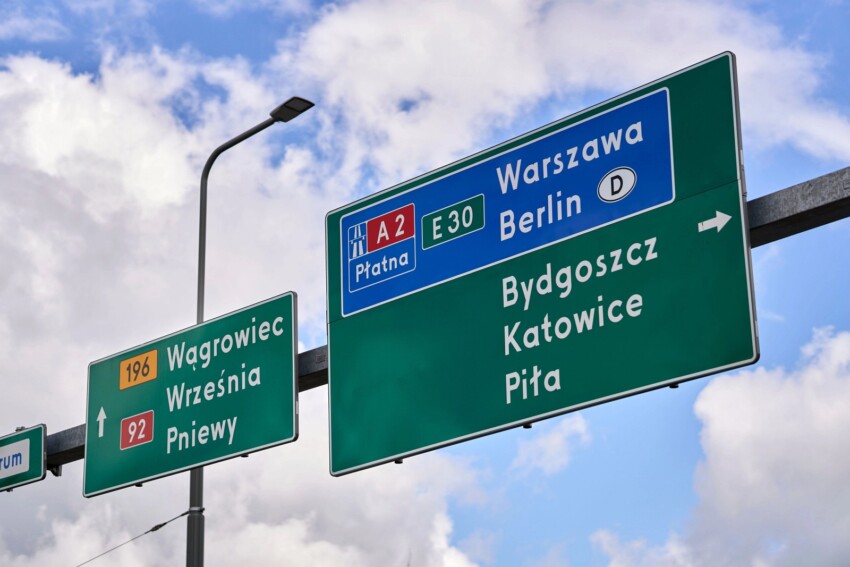
Driving in Poland is generally a pleasant experience: national roads are well-maintained, traffic outside urban centres flows smoothly, and distances between major cities are manageable within a day. Warsaw and Kraków are approximately 300 km apart, Warsaw and Wrocław just over 350 km, and the rapidly expanding motorway network has significantly reduced journey times compared to a decade ago. For those wanting to explore rural regions, the Tatra Mountains, Masuria with its lakes, or smaller towns away from main railway lines, a car remains the most flexible tool and often the only practical option.
However, there are certain specificities of the Polish road system that you must understand before getting behind the wheel. The toll system has been completely redesigned in recent years with the introduction of electronic e-TOLL, which has replaced physical toll booths on much of the motorway network and all toll-charging national roads. Those arriving with a foreign car without registering in advance risk significant penalties, not because the system is hostile to tourists, but because control is carried out via electronic portals and cameras that cannot distinguish between those who forgot to register and those who deliberately evaded the toll.
The parking system in Polish cities also has its rules, with paid zones demarcated in ways that are not always intuitive for foreign visitors, and local apps that make payment far more convenient than traditional pay stations. In this guide you’ll find everything you need to navigate Polish roads by car without surprises.
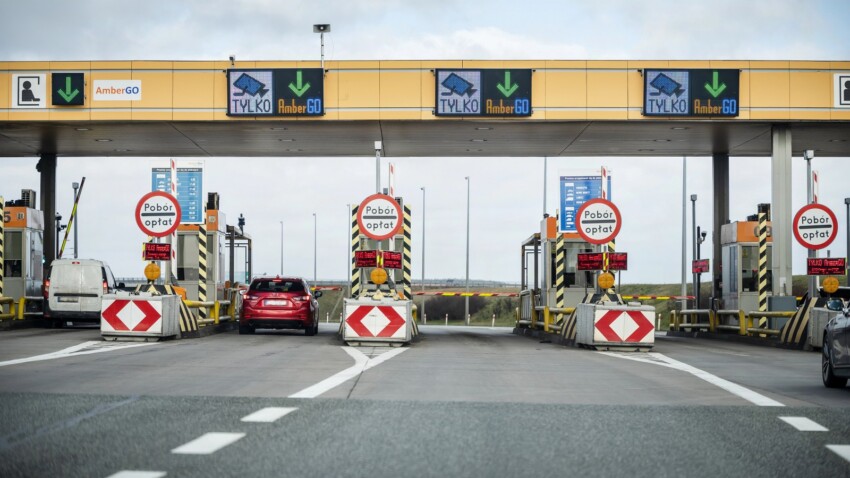
e-TOLL is Poland’s national electronic toll collection system, managed by the National Road and Motorway Directorate (Główny Inspektorat Transportu Drogowego). Introduced progressively from 2021 as a replacement for the old viaBOX system, it is now mandatory for all vehicles using state motorways (marked with the letter A) and toll-charging national express roads (marked with the letter S) where tolls are applicable.
The system works via electronic portals installed along the roads: when your vehicle passes under a portal, it is identified by its number plate using OCR cameras or via an OBU (On-Board Unit) device installed in the vehicle. The toll is automatically charged to the payment method associated with your account. There are no physical toll booths on most e-TOLL sections: if you’re not registered, you pass under the portal anyway but the unpaid toll is detected and penalised.
Registration is carried out on the official portal etoll.gov.pl, available in English. Click “Register” and choose the account type: for occasional use as a tourist, a standard account for light vehicles is sufficient. You will need to provide the vehicle’s number plate data (including the country prefix, for example GB for the UK), owner details and a valid payment method, which can be an international credit or debit card.
The system offers two payment methods: prepaid (you load credit that is deducted each time you pass) or postpaid (the system automatically charges accrued tolls at the end of each billing cycle). For tourists on a short visit, prepaid is more practical: estimate your planned motorway kilometres, load sufficient credit and you won’t need to worry about anything. Unused credit remains on your account for future use.
Alternatively, you can download the e-TOLL PL app available for Android and iOS, which allows you to register the vehicle, manage credit and view journeys in real time directly from your smartphone. The app is available in English and represents the quickest method for those already in Poland who realise they haven’t registered.
Rates vary depending on the length of the section travelled and vehicle category. For private cars (category 1, vehicles up to 3.5 tonnes), tolls on state motorways are around 0.20–0.30 PLN per kilometre. A complete journey on the A1 from Gdańsk to Łódź (approximately 350 km) costs roughly 70–90 PLN; the A4 from Kraków to the German border (approximately 500 km) around 90–110 PLN. These are comparable to UK motorway costs, but over far longer distances.
Exceptions are the A1 motorway (Gdańsk–Toruń section) and A2 (Warsaw–Łódź section), managed by private concessionaires that maintain traditional physical toll booths alongside the e-TOLL system. On these sections you can pay in cash or by card directly at the booth, or pass through e-TOLL dedicated lanes if already registered. Signage clearly indicates the distinction between lanes. The presence of physical booths does not exempt you from e-TOLL registration if you plan to use sections managed by the electronic system.
The Polish road network is divided into clearly distinct categories, recognisable by sign colours. Motorways (A) have green signs with the letter A followed by the number: they are dual carriageway with a speed limit of 140 km/h, the highest in Europe alongside Germany. Express roads (S) also have green signs, a limit of 120 km/h and are in many cases toll-charging via e-TOLL. National roads (DK) have red signs and a limit of 90 km/h outside built-up areas: generally toll-free, they connect medium-sized towns and often run through village centres, with frequent slowdowns.
In built-up areas the limit drops to 50 km/h during the day and 60 km/h between midnight and 5 am, a Polish peculiarity that surprises many foreign drivers. Speed checks are frequent and automated: Poland has one of Europe’s densest networks of fixed and mobile speed cameras. Penalties are sent to the vehicle owner by registration number, meaning even foreign cars are not exempt from fines: car rental companies pass on notifications to their customers promptly.
One detail worth remembering: in Poland it is mandatory to keep your headlights on 24/7, year-round, regardless of visibility conditions. The rule applies even in full summer with bright sunshine. Modern vehicles with automatic daytime running lights comply, but if you’re driving a car with manual lights, remember to switch them on before departing.
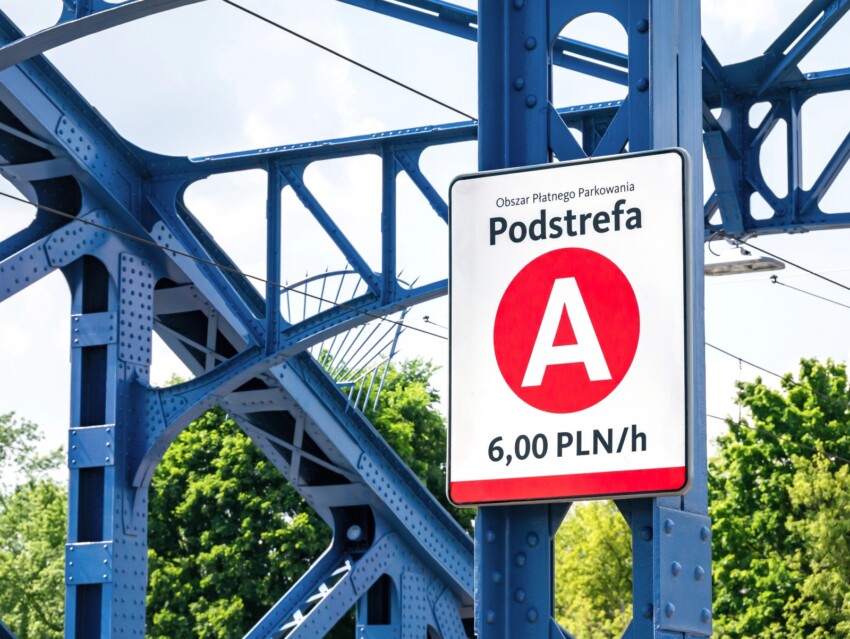
The historic centres of Poland’s major cities are organised into Paid Parking Zones (in Polish Strefa Płatnego Parkowania, abbreviated SPP), marked by blue signs with the letter P and opening times. In SPP zones payment is mandatory on weekdays, usually from 8:00 to 18:00 or 8:00 to 20:00 depending on the city; at weekends and public holidays parking is generally free, but always check the signs as some central Warsaw areas charge even on Saturday.
Rates in the central zones of Warsaw are divided into three tiers with increasing prices as you approach the historic core: the first hour in the most central zone (Podstrefa A) costs around 6 PLN, with progressive increases for subsequent hours. In Kraków Zone A around the Market Square applies similar rates, with the particularity that the first 20 minutes are free on many streets in the peripheral Zone B. In Wrocław and Gdańsk rates are slightly lower and the paid zone less extensive.
SkyCash and mPay are the two most widespread applications for digital parking payment in Polish cities. Both are accepted in most SPP zones, allow you to start and end your parking session directly from your smartphone and eliminate the need to return to your car to insert more coins. Registration requires a telephone number and a payment card; for foreign tourists they work without problems with European mobile numbers and international cards.
Warsaw also has its own official municipal app, Parkuj w Mieście, which covers all SPP zones in the capital and integrates with the municipal police control system. In practice, when you start a session in the app, controllers see in real time that parking is paid and don’t issue penalties: no receipt needs to be displayed on your dashboard. In cities where apps are unavailable or as an alternative, physical pay stations accept coins and in many cases contactless cards.
If you plan to visit historic centres by car, an effective strategy is to park in multi-storey car parks (Parking) at the edges of the pedestrian zone: they generally cost less than street SPP zones, are monitored and allow you to leave your car for the entire day at a flat rate more economical than the sum of individual hours. In Kraków, the underground car parks under Theatre Square and the one on Szpitalna Street offer this option within a few minutes’ walk of the Main Market Square.
The historic centres of Warsaw and Kraków have pedestrian areas or traffic-restricted zones where access is reserved for residents, service vehicles and authorised hotels. In Kraków, the medieval centre within the Planty is completely closed to private traffic: to reach hotels within the historic zone you must request a temporary permit that the hotel usually provides when you make your booking. Driving in these areas without authorisation results in high penalties detected automatically by cameras at the entrances to access roads.
Warsaw does not have a ZTL in the British sense, but some city centre streets are closed permanently or temporarily for events and demonstrations. Navigation apps such as Google Maps are regularly updated with these restrictions and represent the most reliable tool to avoid entering prohibited roads.
 Hotel
Hotel  Budget accommodations
  Apartments
  Family Hotel
  Luxury Hotel